
Taiho Jutsu (逮捕術), which means "arresting techniques" in Japanese, is a synthesis of different martial arts (Judo, Aikido/Aikijutsu, Karate Wado Ryu, Kenpo, Keibo-Jutsu and boxing), specially crafted for the needs of the Japanese police. It is used today by all the law enforcement services in Japan: the Metropolitan Police of Tokyo, the Imperial Guard, the military.
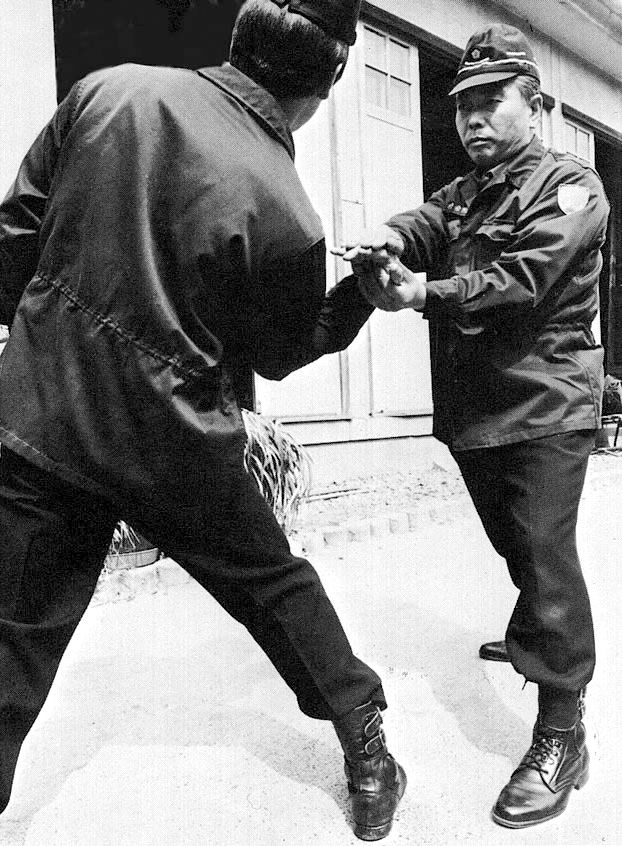
Taiho Jutsu was created at the end of the 19th century, but it really took shape in 1947.
In a harsh post-war context, Japan had to rebuild under US occupation, which imposed severe restrictions on the practice of martial arts. Under these conditions it became difficult for the Japanese police to maintain order in a country going through a difficult period. However, the Japanese took advantage of their history and martial culture by bringing together the greatest masters of the time (Kyuzo Mifune, Saimura Gorō and Hironori Ōtsuka among them) to participate, in cooperation with the Tokyo police, in the creation of Taiho Jutsu.
Control without injury
The philosophy of Taiho Jutsu marked a turning point in the vision of maintaining order in Japan. The ultimate goal of the system is to control an individual without affecting his physical integrity. At that time, the Japanese police integrated rules of intervention similar to Western ones, where the preservation of the individual has its importance, without sacrificing the effectiveness of the arrest or endangering the officers.
This requirement shapes every technique in the system. It is also what makes Taiho Jutsu a sound basis for civilian self-defense, since the response to a threat has to remain proportionate in order to stay within the law.
A modern martial art
Like many Japanese martial arts practised nowadays, Taiho Jutsu is a Gendai budō (現代武道), a modern martial art, by comparison with the Koryū which date back to before the Meiji restoration.
Being modern is a working method here. The system is revised at regular intervals in order to take into account the statistics of real police interventions. Injuries and problems that occurred during actual arrests are catalogued, techniques that do not hold up are removed, and new ones are brought in.